
Newsom signs bill banning forced marriage in California
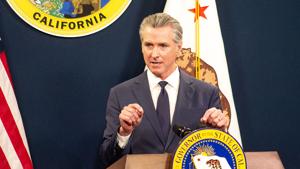
Gov. Gavin Newsom has signed another bill that advocates hope will end human rights abuses in marriage.
On the same day that Newsom signed a bill to end child marriage in California, he signed a bill to end forced marriage.
Newsom, a Democrat, signed into law Assembly Bill 2534, introduced by Assemblymember Ash Kalra, D-San Jose – “Domestic Violence Prevention Act: forced marriage.”
With the new law, California becomes the first state to create a legal restraining order specifically to protect victims of a forced marriage. The law takes effect Jan. 1, 2027. Advocates are hoping it is replicated in other states.
Forced marriage is a form of gender-based violence that primarily impacts women and girls. It is classified as a human rights violation and can be part of human trafficking. It is also often linked to child marriage, where girls are the majority of victims.
Many may believe forced marriage is a phenomenon in third world countries. But advocates of AB 2534 argue the practice is widespread, with cases in the U.S., where it’s difficult for those in forced marriages to pursue legal protections available for survivors of other forms of domestic violence because of the way the law and restraining orders are written.
AB 2534 amends state law to recognize forced marriage as a form of domestic violence and enables anyone in California, child or adult, to seek a restraining order to prevent a forced marriage before it happens. This includes a marriage in the civil legal system or through a religious or cultural ceremony. The law also applies to anyone already in a forced marriage.
“In creating the country’s first Forced Marriage Restraining Order, California has set itself apart as a leader in the movement to end forced marriage in the United States. This law provides survivors with a critical new tool to protect themselves before a forced marriage occurs and sets an example for similar action across the country,” Tahirih Justice Center public policy manager Alex Goyette said.
“California closed a gap in the law that left survivors of forced marriage without clear civil protections when they needed them most,” said Sadia Khan, policy advocate at Family Violence Law Center and a forced marriage survivor. “For more than 12 years, my own story showed where California law fell short.”
She described in gruesome detail her experience of a forced marriage when testifying in support of the bill before a California Assembly committee.
“I know what it feels like to have your choices taken from you, to believe no one can stop what’s happening, and to discover that the law doesn’t have a clear answer for your situation,” Khan told The Center Square in an email. “The right to choose if, when, and whom you marry is one of the most fundamental freedoms a person has. California has now recognized that survivors deserve protection before irreversible harm occurs, not after.”
Khan said she had to get her restraining order from the United Kingdom, which has had this type of protection on the books for some time, because there was no such protection under California law.
California’s new law changes this by giving courts a clear authority to intervene before someone is forced onto a plane, their passport is confiscated or they are pulled out of school to be forced into a marriage, advocacy groups argue.
In the U.S., the practice is predominantly found in immigrant communities.
In 2011, the Tahirih Justice Center published a report stating that its staff had noticed an “increasing number of forced marriage cases involving young women and girls — some as young as 13 — from traditional immigrant communities in the United States. By force, fraud, or coercion, they were being compelled to marry men from their families’ countries or regions of origin, and — if the young woman was a U.S. citizen — she might then be forced to sponsor a fiancé or spouse visa to enable the groom to come to the United States.”
The center also surveyed more than 500 social service agencies nationwide that reported encountering 3,000 suspected and confirmed forced marriage cases. Among them, 67% of services providers said that forced marriage cases weren’t being properly identified in their caseload. As a result, it believed at the time that the number was much higher.
Forced marriages were identified in immigrant communities from 56 countries, impacting people of different backgrounds and faiths, according to the report.
The Tahirih Justice Center has published a range of resources to help those trapped in a force marriage.




Mostly Clear
